1. Introduction
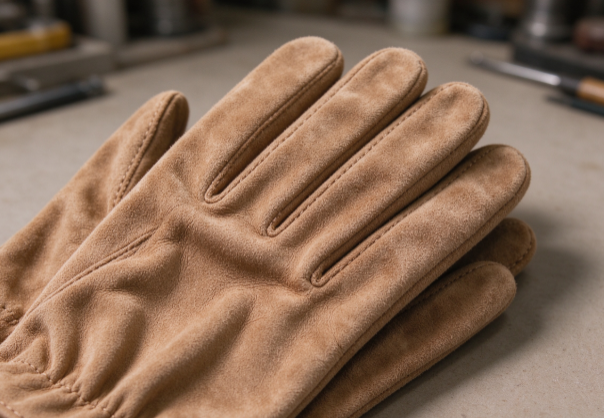
Microfiber leather is a high-performance synthetic leather material built from ultra-fine nylon fiber non-woven substrate combined with PU resin. Its inner fiber structure imitates the fiber layout of natural leather. It is widely used to make work gloves, mechanic gloves, golf gloves and custom promotional gloves. Unlike ordinary PU leather that only has a thin coating on fabric, microfiber leather has a dense, stable fiber base. This special construction gives it a leather-like touch, stable grip performance and stronger tear resistance. It resists abrasion, keeps uniform quality across batches, and offers a budget-friendly substitute for natural hide. Many glove buyers choose when they need steady appearance and reliable wear resistance though it also has clear limits on breathability and stretch.
2. Key Advantages of Microfiber Leather Gloves
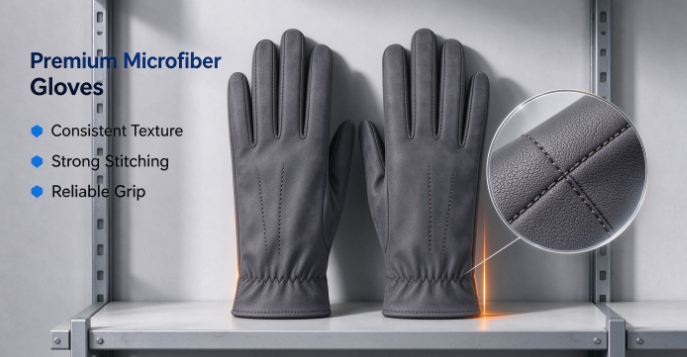
- Consistent quality: No natural scars, marks or grain variation like cowhide. Every batch keeps uniform color and texture.
- Great abrasion resistance: It holds up well against repeated friction, suitable for heavy handling tasks.
- Water and stain resistance: It does not absorb water quickly, so it stays stable in damp environments and is easier to clean.
- Stable sizing: It rarely shrinks or stretches much after washing or long-time use.
- Cost control: More affordable than top-grain leather, with a similar premium look.
- Low maintenance: No special leather conditioner required.
3. Main Limitations of Microfiber Leather Gloves
- Less breathable compared with genuine leather. Hands may feel warmer during long-time wear.
- Not as stretchy as natural cowhide. It takes longer to break in and form to the hand shape.
- Poor resistance to extreme high heat. It may harden or deform under sustained high temperature.
- The cheap low-density microfiber version will peel easily after months of heavy use.
4. How to Maintain Microfiber Gloves for Longer Service Life
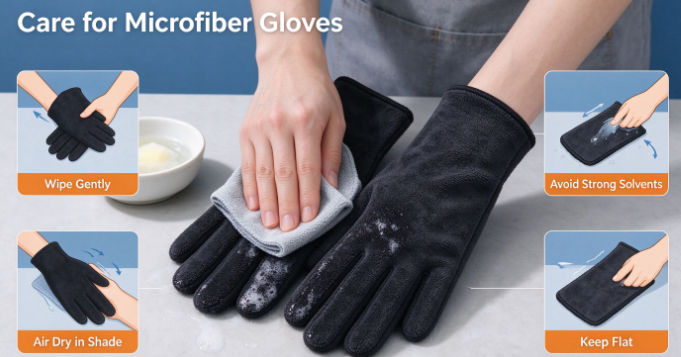
- Clean stains gently with soft cloth and mild soap. Do not use strong solvents or bleach.
- Avoid soaking the gloves in water for a long time. Wipe clean instead of deep washing.
- Air dry naturally in cool shade. Never put them under direct sunlight or near heat sources.
- Keep gloves away from sharp objects to prevent surface cuts and peeling.
- Rotate multiple pairs if you use them every day. This gives material time to recover and reduce continuous wear.
- Do not fold or squeeze gloves tightly for long storage. Keep them flat to avoid permanent creases.
5. Buying Tips for Buyers
- Check density first. High-density microfiber is tight and not easy to peel. Low-density material is a low-cost option with short service life.
- Confirm coating finish: Matte finish looks more like real leather, glossy finish is easier to wipe clean.
- Match your working environment: Choose microfiber for wet, dirty or heavy-friction scenes. Pick natural leather if breathability is your top priority.
- Test flexibility before bulk order. Stiff microfiber will hurt dexterity for fine grip work.
6. Conclusion
Microfiber leather is a reliable synthetic leather alternative for gloves, balancing uniform appearance, solid wear resistance and competitive price. It works best when you need consistent quality and lower cost, as long as you accept its limits on breathability and stretch.