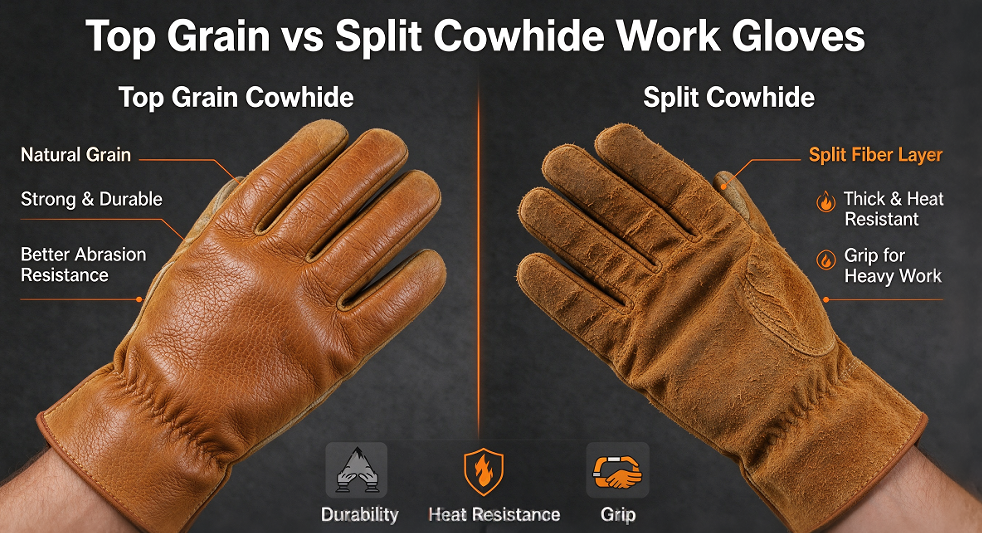
Suede is a napped leather and synthetic material widely adopted for high-grip performance gloves, including golf gloves, cycling gloves, driving gloves and light precision handling PPE. It falls into two categories: genuine suede, produced by sanding the inner layer of animal hide, and microfiber faux suede, an engineered textile made from ultra-fine polyester or nylon filaments.
Many buyers confuse these two materials and select suede gloves without understanding their inherent performance boundaries. This professional guide breaks down their functional strengthens, critical limitations, side-by-side material comparison, suitable working conditions and practical selection rules, helping distributors and end users make data-backed purchasing decisions.
1. Main Advantages of Suede Gloves
Superior dry grip performance
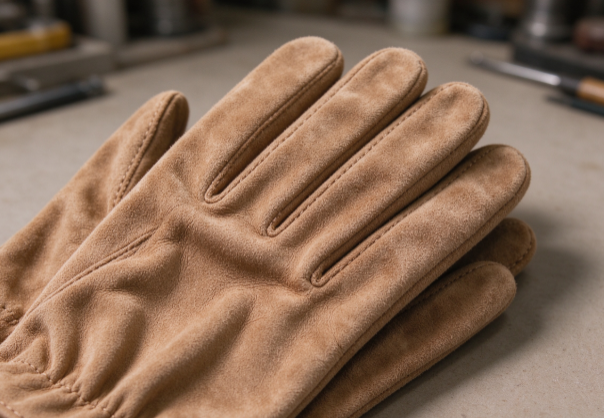
The raised short nap structure creates abundant micro contact points. This delivers reliable friction between the glove surface and smooth or semi-smooth objects such as golf club grips, bicycle handlebars and precision hardware, even under mild perspiration. This grip property is the primary reason suede dominates premium sports glove applications.
Good conformability and dexterity
Compared with rigid full-grain cowhide, suede features lower stiffness. It gradually conforms to the contour of the wearer’s hand after short break-in time. The material does not restrict independent finger movement, which is essential for tasks requiring fine motor control.
Low bulk and long-wearing comfort
Suede can be processed into thin, lightweight specifications. It avoids the bulky, restrictive feeling of thick work leathers during extended continuous wear, reducing hand fatigue for long shifts or long-distance sports.
Unique benefits of microfiber faux suede
Engineered faux suede has highly consistent physical properties across production batches. It manufacturing process eliminates natural hide defects such as scars, brand marks and grain variations. It resists mildew, insert damage and rot, supports customizable color matching, and carries a more competitive unit cost that genuine suede.
2. Key Disadvantages of Suede Gloves
Degraded performance in wet conditions
Genuine suede is highly absorbent. Once saturated with water, the fiber structure hardens permanently, visible water stains form, and the napped layer collapses, resulting in a sharp drop in friction. Microfiber faux suede also loses its non-slip effect when fully soaked, even though it will not harden the same way as animal suede. Neither variant is suitable for sustained wet working environments.
Limited abrasion resistance
The surface nap is sacrificial functional layer. Repeated rubbing against rough, sharp or coarse surfaces flattens and wears away the pile quickly. Once the nap is gone, grip performance disappears. Suede is not rated for heavy construction, metal scraping or rough material handling.
Demanding care requirements
Genuine suede cannot go through conventional water washing. Improper cleaning leads to irreversible hardening, mottling and color transfer. Microfiber faux suede tolerated gentle washing better, yet repeated laundering gradual wears down the velvet nap and reduces grip over the service life.
No heat or flame resistance
Both genuine suede and synthetic microfiber suede have low heat resistance. Genuine leather suede will char and shrink at moderate heat, while faux suede melts and drips under high temperature. These materials are strictly forbidden for welding, hot component handling and high-temperature process work.
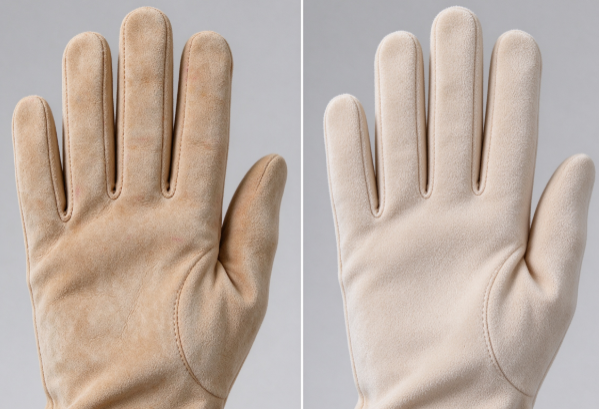
3. Difference Between Genuine Suede and Faux Microfiber Suede
| Feature | Genuine Suede | Faux Microfiber Suede |
|---|---|---|
| Breathability | Excellent natural vapour permeability | Moderate, lower than genuine suede |
| Batch consistency | Variable; natural hide defects are common | Highly uniform, controlled factory production |
| Cost level | Higher material and processing cost | Cost-effective for mass production |
| Mildew resistance | Prone to mildew in humid storage | Mildew and insect resistant |
| Surface feel | Natural leather texture, premium touch | Uniform soft synthetic nap |
| Grip retention after wear | Nap wears slowly with proper use | Nap tends to compact faster with heavy friction |
4. Suitable Application Scenarios
Suede gloves are designed for low-abrasion, dry-environment applications prioritizing consistent grip and finger flexibility. Typical uses include golf, road cycling, vehicle driving, electronic component assembly, lab sample handling and light-duty precision finishing.
You should avoid suede gloves for any scenarios with continuous water exposure, outdoor rainy work, heavy abrasive contact, cold storage with condensation, and any operation involving hot surfaces or sparks.
5. Professional Purchasing Tips
Start with your site or sport environment assessment. If breathability, natural hand feel and premium product positioning are you priority, genuine suede is the better option. If you need stable quality, consistent colour, lower cost and good anti-mildew performance for bulk orders, select microfiber faux suede.
Check the nap density before purchase: dense, evenly distributed naps deliver longer-lasting grip. Confirm the coating and backing construction if you select faux suede. Do not specify suede for any PPE tender that requires water resistance, cut resistance or heat protection.
Suede is a specialized grip-focused material rather than an all-purpose protective leather. It excels at dry-state friction, hand conformability and lightweight comfort, but it has clear weakness in water resistance, abrasion performance and heat tolerance. By distinguishing genuine suede and microfiber faux suede, and matching material properties to actual working or sporting conditions, you can select suede gloves that balance performance, service life and total cost.