
Working in cold winter environments brings many challenges, from freezing hand temperatures and stiff fingers to increased workplace safety risks. To fight the cold, most workers and procurement teams prioritize purchasing winter work gloves based on intuitive factors: Thickness, soft feel, or low price. However, these subjective selection habits lead to a range of practical problems on job sites.
Improper winter gloves often cause reduced operational flexibility, frequent glove damage, unnecessary replacement costs, and even occupational frostbite or mechanical injuries. Many common winter glove issues are not caused by poor product quality, but by universal buying misunderstandings. In this guide, we will break down the most frequent winter work glove buying mistakes and share simple, practical solutions. By the end of this article, you will master standardized, job-site-oriented selection skills to pick warm, safe, flexible and durable winter work gloves that perfectly match your working scenarios.
This article breaks down the most frequent winter glove purchasing errors and shares easy, actionable solutions. After reading, you can quickly choose suitable, safe and cost-effective winter work gloves for your job.
1. Mistake 1: Choosing Gloves Only by Thickness
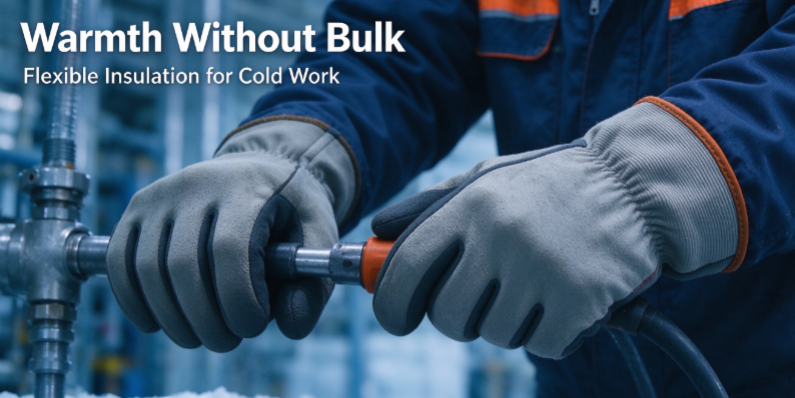
The biggest misunderstanding is “the thicker the warmer”. Glove warmth does not depend on thickness. It depends on the material’s air-trapping structure and certified thermal resistance.
Overly thick gloves are bulky and stiff. They reduce finger flexibility, affect tool operation and increase the risk of slipping during handling. In fact, many slim, high-performance insulated gloves provide better warmth with high dexterity.
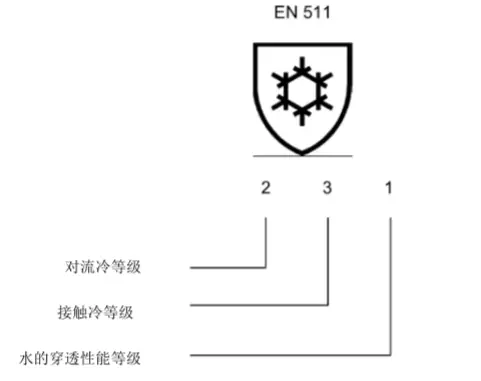
Solution: Refer to EN 511 thermal rating instead of judging warmth by visual thickness.
2. Mistake 2: Ignoring Mechanical Protection
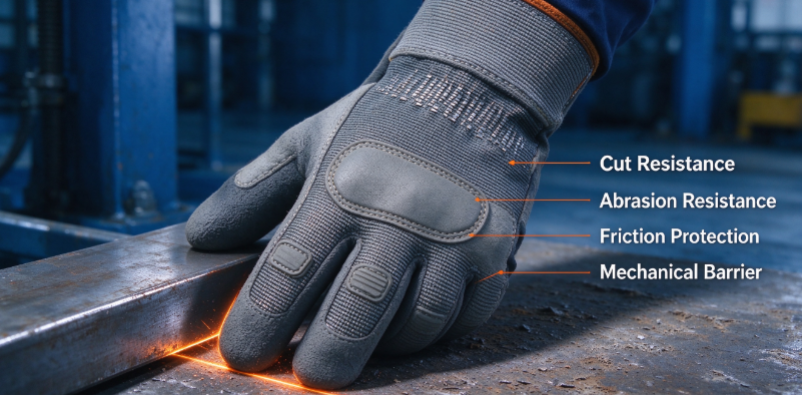
Many basic winter gloves only provide warmth without mechanical protection. Cold-site work, such as construction, logistics and cold storage handling, often involves sharp edges, rough surfaces and metal friction.
Gloves without cut and abrasion resistance are easy to tear and cannot protect hands from mechanical injuries in cold working conditions.
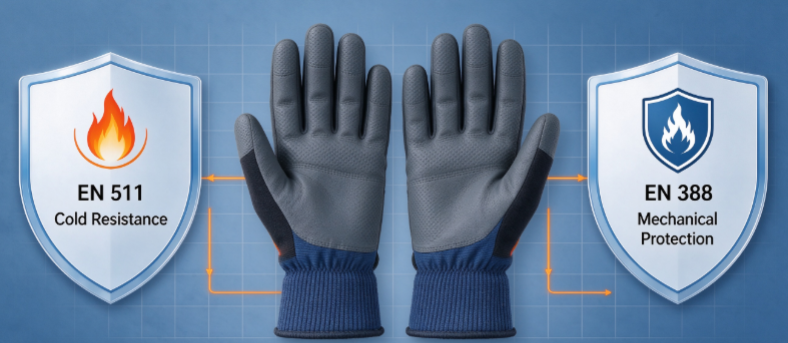
Solution: Choose dual-certified gloves with both EN 511 cold resistance and EN 388 mechanical protection for industrial cold work.
3. Mistake 3: Overlooking Waterproof and Breathability
Moisture is the biggest enemy of winter insulation. Frost, melted snow, humid air and hand sweat can easily dampen glove liners. Wet insulation loses thermal resistance quickly, making hands feel colder and increasing frostbite risks.
Many warm winter gloves fail in wet and frosty environments because they lack water resistance and breathability.
Solution: Select gloves with a water-resistant outer layer and breathable lining for humid cold workplaces.
4. Mistake 4: Neglecting Proper Glove Sizing
Improper size is often ignored but greatly affects protection and comfort. Loose gloves slide easily, waste heat and reduce grip stability. Tight gloves squeeze fingers, block blood circulation and make hands colder faster in low temperatures.
Wrong size also accelerates wear and shortens glove service life.
Solution: Follow the brand size chart and choose a snug but flexible fit for daily operation.
5. Mistake 5: Judging Durability by Appearance
Soft, fluffy gloves look durable, but many low-quality insulation materials compress and wear out quickly under long shifts and repeated friction. After short-term use, the inner insulation collapses and loses warming ability.
Solution: Check outer shell material and abrasion resistance instead of relying on soft appearance.
Most winter work glove problems stem from simple but common purchasing mistakes. Many workers overemphasize thickness and softness while ignoring core factors such as certified thermal performance, mechanical protection, waterproof ability and proper sizing. A glove that feels warm visually may fail quickly in real cold, wet and high-friction working environments.
By avoiding these errors and following standard-based selection rules, workers and procurement teams can choose reliable winter gloves that balance safety, comfort and durability. Correct glove selection effectively prevents frostbite and mechanical injuries, maintains stable working efficiency, and reduces long-term PPE replacement costs for all cold-season industrial operations.