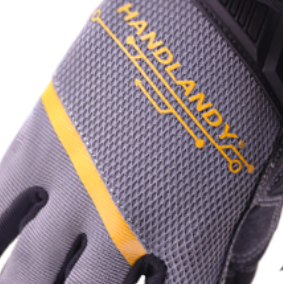
When sourcing protective work gloves, procurement teams and end users typically prioritize palm performance matrics such as cut resistance, abrasion rating and grip coating. Yet field data consistently shows that the wrist cuff is the primary failure zone before the palm reaches the end of its service life. The cuff assembly undergoes cyclic mechanical loading during donning and doffing, continuous contact friction, and exposure to workplace contaminates. Once the cuff loses elastic recovery, delaminates or ruptures, the glove’s wrist containment and barrier protection are compromised, requiring full replacement.

1. Root Causes of Cuff Premature Failure
- Cyclic tensile fatigue: Repeated stretching during donning and doffing stresses elastic yarns. Low-grade spandex suffers permanent set and gradually loses recovery force.
- Chronic abrasive wear: The cuff rubs against workwear sleeves, equipment frames and component edges, generating progressive fraying at the knit surface and seam line.
- Stress concentration at the transition seam: The junction between liner body and cuff is a high-stress point. Single-row stitching or insufficient lockstitch density leads to seam rupture under tension.
- Chemical and hydrolytic degradation: Oils, coolants, solvents and alkaline cleaners degrade elastic fibers and sewing threads, reducing tensile strength and making materials brittle.
- Mismatched sizing: Undersized cuffs create excessive static tension; oversized cuffs slip down and introduce snag hazards around moving machinery.
2. Standard Cuff Constructions & Performance Limitations
- Knitting elastic cuff
This is the most widely used base cuff for general-purpose knit work gloves. It is integrated directly into the glove liner on the knitting machine, blended with spandex yarns to deliver consistent radial compression. It is economical, lightweight and maintains high hand flexibility for repetitive assembly tasks.
Limitation: The embedded spandex yarn is vulnerable to cyclic fatigue. Under frequent donning/doffing, heat and chemical exposure, the elastic gradually relaxes and cannot hold the wrist tightly. It offers minimal extra abrasion resistance and no extended splash coverage.
- Rib safety cuff
The rib safety cuff adopts a denser, vertical rib knit structure with higher stitch density than standard elastic cuffs. The rib geometry helps resist rolling and curling during movement, and it holds its shape better after repeated stretching. It is commonly specified for light fabrication, warehouse handling and general maintenance work.
Limitation: Its improved dimensional stability comes only from knit structure, not enhanced abrasion resistance. The surface knit fibers will still wear thin and fray after long contact with rough metal edges or concrete. It also provides no extra forearm coverage.
- Gauntlet cuff(extended forearm cuff)
The gauntlet cuff extends 7CM to 15CM above the wrist, depending on the design. It can be knit, coated or made of leather, and it creates a physical barrier covering the lower forearm. It is widely selected for oil splash, chemical handling, welding, foundry and landscaping jobs where liquids, hot debris or sharp scraps may run down the sleeve.
Limitation: The longer profile creates extra material that can catch on protruding fixtures, conveyor parts and rotating machinery if not tucked correctly. Heavy coated gauntlet styles also reduce wrist mobility and add heat buildup inside the glove. Seams along the extended section are new potential failure points.
- Hook-and-loop adjustable cuff
This construction adds a woven hook-and-loop strap anchored onto the cuff body. Operators can adjust clamping tension individually to fit different wrist sizes, and it can lock the glove firmly in place to prevent sliding during heavy vibration or aggressive lifting. It is popular for heavy machinery, construction and rescue aaplications.
Limitation: The strap base relies on bartack stitching to attach to the knit substrate. Sudden lateral pulling or snagging often tears these anchor stitches first. The hook side may also abrade work clothing and catch on other equipment. The strap will lose grip performance if contaminated with oil, dust or grease.
3. Technical Selection Guidelines for Durable Cuffs
- Verify reinforced seam construction: Prioritize double lockstitch or bartack reinforcement at the cuff-to-liner transition joint.
- Aligh cuff style with hazard exposure: Select gauntlet cuffs for liquid splash hazard; hook-and-loop cuffs are recommended for heavy mechanical handling requiring stable wrist positioning.
- Evaluate elastic recovery: Qualify elastic performance by stretch rebound testing; qualified elastic should return to original dimension without permanent elongation.
- Confirm chemical compatibility: Match cuff fiber and thread material against the specific oils, solvents or cleaning agents present on site.
4. Operational & Maintenance Protocols to Extend Cuff Lifespan
- Train workers to remove gloves by gripping the palm/coating area instead of pulling directly on the cuff to avoid concentrated tensile load.
- Keep cuffs clear of sharp edges, hot surfaces and rotating machine components.
- Avoid high-temperature laundering or tumble drying; elevated heat accelerates elastic degradation and thread shrinkage.
- Implement pre-shift inspection: Discontinue glove use immediately if fraying, seam splitting or permanent elastic extension is detected.
While palm performance dominates glove specification discussions, cuff integrity is a critical factor controlling overall glove service life. Proper cuff construction, matched hazard rating and correct handling practices together minimize early failure. Optimizing cuff selection reduces overall PPE consumption cost and maintains continuous wrist and forearm protection for operators.