
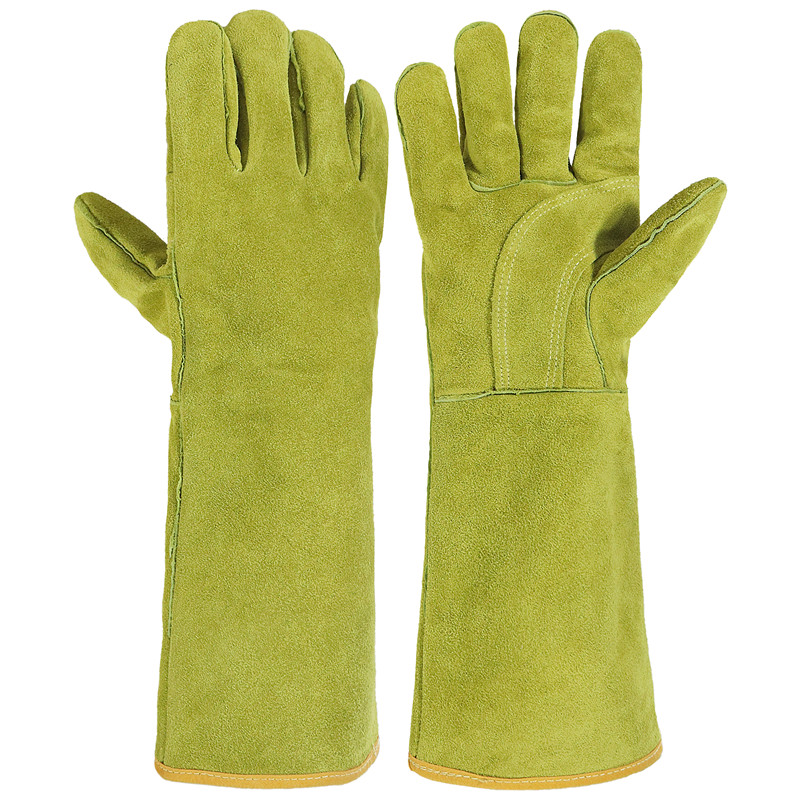
Leather work gloves are indispensable for heavy-duty industrial, construction, and mechanical tasks, offering a unique blend of durability, breathability, and natural grip that synthetic materials can’t match. Cowhide, goatskin, and pigskin are the three most widely used leathers in work glove production, but their performance varies drastically in abrasion resistance and dexterity – two factors that directly impact worker efficiency and safety. To help you select the right material, we conducted lab tests per ASTM D3883 (abrasion resistance) and ASTM F2054 (dexterity) on identical glove designs (same thickness, stitching, and lining) to compare these three leathers objectively.
Test Methodology: Ensuring Fair Comparison
All test samples were 100% full-grain leather gloves with a cotton lining and reinforced palm stitching (standard for mechanical and construction work gloves). Tests were conducted in a controlled lab environment at 22°C (72°F) and 50% humidity to eliminate environmental variables:
- Abrasion Test: Measured the number of cycles required to wear through the leather palm (ASTM D3883).
- Dexterity Test: Had 10 mechanical workers complete a precision task (tightening 10mm bolts) while wearing each glove type, scoring flexibility and finger movement on a 1–10 scale.
- Grip Test: Tested wet/dry grip strength by measuring the force required to slip a metal pipe from the glove’s grasp.
1. Cowhide Work Gloves: The Heavy-Duty Durability Leader
Cowhide is the thickest (1.2–1.5mm) and most durable of the three leathers, sourced from cow hides and processed via a chrome tanning process (the most common method for industrial gloves) to enhance toughness and water resistance. The tight grain structure of cowhide makes it resistant to punctures and abrasions, even in rough construction settings.
Test Results
- Abrasion Resistance: 5200 cycles (highest of the three) – 20% more durable than goatskin and 30% more than pigskin.
- Dexterity: 6/10 – decent flexibility for basic mechanical tasks, but less agile for fine work (e.g., handling small nuts).
- Grip: 4/5 – natural grain provides strong dry grip; wet grip improves with a textured finish (e.g., palm embossing).
Production Nuance
Split cowhide (a cheaper alternative to full-grain) has lower abrasion resistance (3000 cycles) but is more affordable – ideal for low-budget construction teams. Full-grain cowhide, however, is recommended for heavy mechanical work (e.g., welding, metal fabrication) due to its unbroken grain structure.
Ideal Applications
Construction (demolition, bricklaying), heavy mechanical repair (tractor maintenance), welding, and any task involving rough materials (e.g., lumber, metal pipes).
2. Goatskin Work Gloves: The Perfect Balance of Dexterity & Durability
Goatskin is thinner (0.8–1.0mm) than cowhide, with a soft, supple grain that makes it the most dexterous of the three leathers. It’s processed via vegetable tanning (for premium gloves) or chrome tanning (for industrial-grade options), resulting in a leather that molds to the hand quickly – reducing break-in time for workers.
Test Results
- Abrasion Resistance: 4300 cycles – balanced durability for medium-duty tasks.
- Dexterity: 9/10 (highest score) – workers completed the bolt-tightening task 20% faster than with cowhide gloves.
- Grip: 5/5 – the fine grain of goatskin provides exceptional wet/dry grip, even for slippery mechanical parts.
Production Nuance
Goatskin is more expensive to source than cowhide or pigskin, but its long lifespan (2–3x longer than pigskin) offsets the cost for precision-focused roles. It’s also naturally water-resistant (resists swelling when wet) – a bonus for outdoor mechanical work.
Ideal Applications
Precision mechanical assembly, automotive repair (engine work), electrical work, and tasks requiring both flexibility and moderate durability.
3. Pigskin Work Gloves: Breathability & Grip for Wet Environments
Pigskin is a lightweight (0.9–1.1mm) leather with a porous grain structure that makes it the most breathable option. It’s processed via chrome tanning, and its unique fiber structure allows air to flow freely – reducing sweat buildup during long shifts. Pigskin also has a natural tendency to “grip” surfaces, even when damp.
Test Results
- Abrasion Resistance: 3800 cycles (lowest of the three) – best for light to medium-duty tasks.
- Dexterity: 8/10 – nearly as agile as goatskin, with a soft feel that requires minimal break-in.
- Grip: 5/5 – outperformed cowhide and goatskin in wet grip tests (critical for outdoor winter construction or rainy mechanical work).
Production Nuance
Pigskin swells slightly when wet but dries quickly without stiffening – a key advantage over cowhide (which can crack if dried too fast). It’s also the most affordable premium leather option, making it popular for casual industrial use.
Ideal Applications
Outdoor construction (winter or rainy conditions), light mechanical work (e.g., garden tool operation), warehouse labor, and any task where breathability is a top priority.
Cowhide vs Goatskin vs Pigskin: Test Result Summary
| Property | Cowhide | Goatskin | Pigskin |
|---|---|---|---|
| Abrasion Cycles (ASTM D3883) | 5200 | 4300 | 3800 |
| Dexterity Score (1–10) | 6 | 9 | 8 |
| Wet Grip Score (1–5) | 4 | 5 | 5 |
| Breathability | Moderate | Good | Excellent |
| Cost (per pair) | $8–$12 | $10–$15 | $7–$10 |
| Best For | Heavy-Duty | Precision | Wet/Outdoor |
Final Selection Guide
- Choose Cowhide for heavy construction and mechanical work where durability is non-negotiable – it’s the toughest option for rough environments.
- Choose Goatskin for precision mechanical tasks (e.g., engine repair) where dexterity and grip are critical – it’s the most agile premium leather.
- Choose Pigskin for outdoor or wet work (e.g., winter construction) where breathability and wet grip matter – it’s affordable and comfortable for long shifts.
Conclusion
Our lab tests confirm that cowhide, goatskin, and pigskin each excel in different industrial scenarios: cowhide for heavy-duty durability, goatskin for precision dexterity, and pigskin for breathable wet grip. All our leather work gloves are crafted from top-grade hides with reinforced stitching (a key factor in glove lifespan) and meet ASTM safety standards. Whether you need gloves for construction, mechanical repair, or outdoor winter work, explore our range and contact our team to find the perfect leather material for your team’s needs.





3 Responses
A really good blog and me back again.
Thanks a ton for the shout-out—knowing the site was helpful to you just made our day.
We’ll keep the good stuff coming!
All the best,
wish you all the best