Cowhide remains one of the most trusted materials for protective work gloves. It resists abrasion, stands up to minor heat, and gives a secure grip for many industrial jobs. Many new buyers and procurement teams mix up top grain cowhide and split cowhide. Both are genuine cow leather from the same hide, but they are cut from different layers after the hide is split by machinery.
Their fiber structure, comfort level, wear life and overall protection are not the same. If you pick the wrong type, you may face shorter glove life, stiff hands or unexpected safety risks. This easy guide breaks down their features to help you make a confident buying decision.
1. What is Top Grain Cowhide?
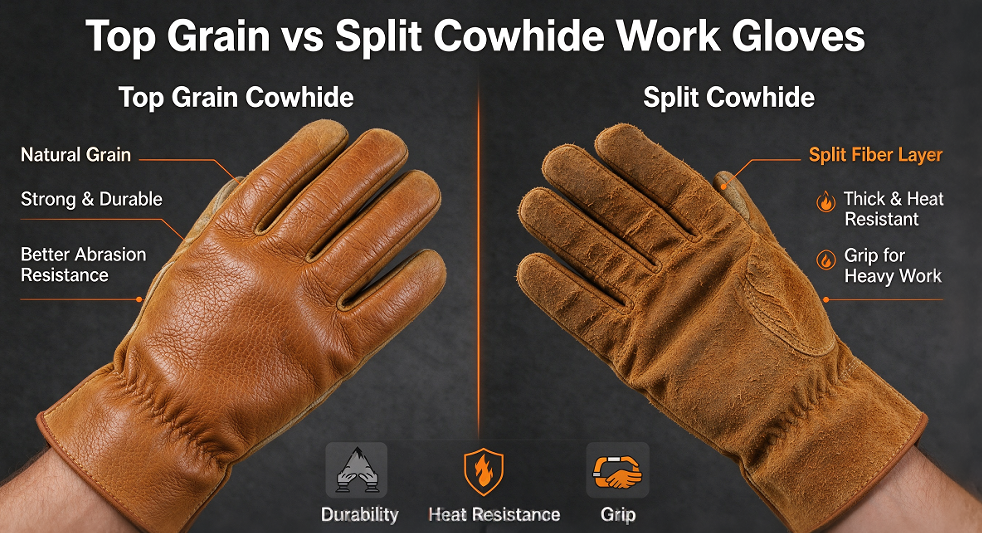
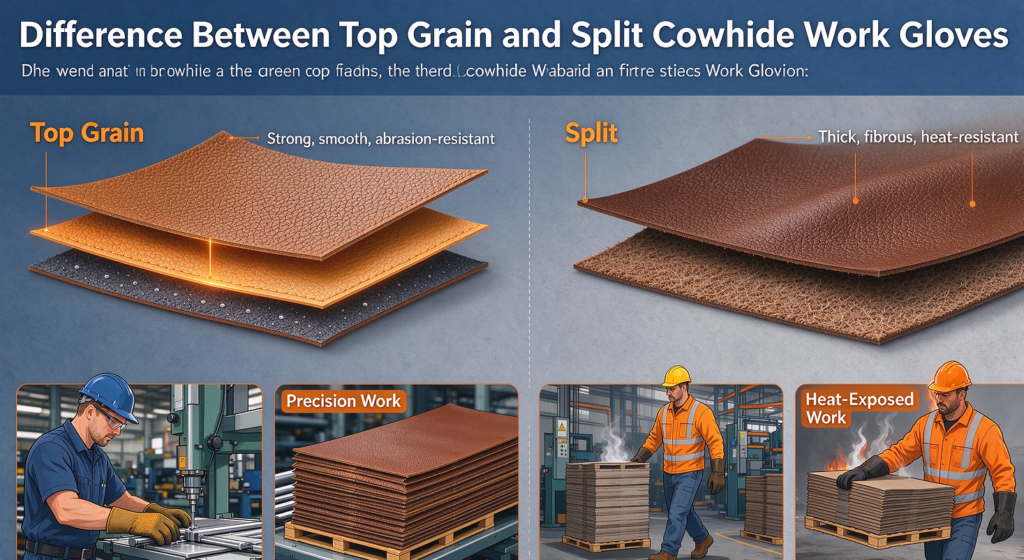
Top grain cowhide is the outer layer of the raw cowhide. It retains the original natural grain and tiny breathing pores on the leather surface. The fibers in this layer grow tightly packed together. It does not rely on extra PU coating to create its surface texture. The grain is built into the leather itself. With regular use, it breaks in nicely instead of turning stiff. It keeps a soft, comfortable feel and supports fine finger movements.
This material is widely selected when workers need both reliable hand protection and good dexterity all shift long.
2. What is Split Cowhide?
Split cowhide comes from the inner section after a thick cowhide is sliced horizontally. It has no natural outer grain or skin layer. In its raw state, the surface looks fuzzy and fibrous, similar to suede.
Most manufacturers spray a thin PU coating over split cowhide. This coating creates a smooth grain look and adds basic abrasion resistance. However, this film is only a surface layer. With repeated rubbing, scraping or exposure to water, the coating can crack, peel or rub away.
Once the coating fails, the loose inner fibers wear down quickly, and the glove loses its protective performance.
| Feature | Top Grain Cowhide | Split Cowhide |
|---|---|---|
| Surface | Natural grain with real breathing pores | Fibrous base covered with artificial PU coating |
| Fiber structure | Dense, compact and strong | Looser, less tightly bonded fiber |
| Tear resistance | Excellent, stable even after long wear | Lower; performance drops fast once coating peels |
| Dexterity | Soft, breaks in well, supports fine hand movements | Usually stiffer, harder for precise tasks |
| Breathability | Good; air flows through natural pores | Poor when coated; hands sweat easily inside |
| Lifespan | Longer, consistent protection over time | Shorter service life, risk of coating delamination |
| Price | Higher cost | Budget-friendly, lower upfront cost |
| Best for | Driver gloves, precision repair, premium welding work | General material handling, construction, low-cost rough work |
3. Cowhide A/B/C Grading Standard for Work Gloves
Grade A leather has very few defects. Only tiny pinholes, faint scratches or light brand marks are allowed. Most of the usable surface stays clean and even, with almost no repairs. It is widely used for premium top grain gloves for precision handling and frequent heavy-duty work.
Grade B leather comes with scattered minor defects. There may be a small number of scars, marks or thin spots on the hide. Importantly, these flaws will not cluster on high-stress areas such as the palm and thumb crotch. Simple repairs are acceptable for Grade B leather. It is the standard choice for regular top grain or high-quality split leather gloves for construction and warehouse work.
Grade C leather carries many obvious defects. It may have large scars, deep scratches, heavy brand marks and thin areas. Defects can even appear on the palm region, and heavy patching or repairs are common. This grade suits economy split leather gloves for short-cycle light work or temporary use.
4. Common Misunderstanding
Split cowhide is still made of real cow fiber. It is not synthetic leather or fake leather. A common mistake buyers make is expecting split cowhide to perform the same as top grain.
All its surface wear resistance comes from the PU film. Once this outer layer is damaged, there is no built-in grain layer left for protection.
Another important point: the leather layer (top grain/split) and the A/B/C quality grading are separate standards. Both top grain and split cowhide can be sorted into Grade A, B or C based on surface scars, bug holes and blemishes. A B-grade top grain can still outperform an A-grade split glove in many working conditions.
5. Quick Buying Guide
Choose top grain cowhide gloves if your workers perform repeated daily tasks, need flexible finger control, or require steady, long-lasting hand protection. It works great for truck drivers, mechanics and premium welding applications where comfort and grip accuracy matter.
Choose split cowhide gloves for heavy, rough handling work when you are working within a tight budget. It suits simple loading, construction and general warehouse tasks. It is not ideal for jobs that demand precise hand movements or frequent contact with water and sharp edges.
6. Conclusion
Top grain cowhide delivers reliable tear strength, natural breathability and superior dexterity for demanding daily work. Split cowhide serves as an economical leather option for basic industrial tasks, but its protective performance is limited by the durability of its PU surface coating. Matching the leather type to your actual job risks will help you balance safety, work comfort and overall PPE cost.