1. Introduction
The thumb crotch is the triangular area between your thumb and index finger. Every time you grasp, twist, pull or hold tools and raw materials, this spot bears most of the mechanical stress. For many workers, it is frustrating to find their work gloves still look fine everywhere else, yet rip or split right at the thumb crotch after only a short period of use.
This common failure happens because repeated stretching, rubbing and sharp snags constantly attack this seam zone. Thumb crotch reinforcement solves this problem by adding an extra tough material layer to this high-risk area. It improves glove durability and hand protection, without sacrificing the hand flexibility workers need to finish daily tasks. This article breaks down what this design is, how it works, and when you should select work gloves with this feature.
2. What is Thumb Crotch Reinforcement?
Thumb crotch reinforcement refers to an additional patch or coating of robust material applied specifically to the high-stress thumb crotch area. Instead of making the whole glove thicker and less flexible, manufacturers only reinforce this single weak point. This targeted design balances protection and hand mobility, so workers can keep precise finger control while gaining extra strength at the most vulnerable spot.
Different materials are used for reinforcement, and each brings unique performance for different working hazards.
| Reinforcement Material | Key Features |
|---|---|
| Synthetic leather | High abrasion resistance, balanced softness, stands up to repeated rough contact |
| Nitrile coating | Excellent oil and liquid resistance, reliable non-slip grip for wet and oily work environments |
| PU coating | Ultra-thin and flexible, provides light scratch protection for assembly and fine handling |
| Aramid fiber | Outstanding cut and tear resistance, ideal for handling sharp metal, glass or shards |
3. Core Functions of Thumb Crotch Reinforcement
3.1 Extend glove service life and reduce PPE spending
The thumb crotch takes continuous friction and pulling force during daily work. Without reinforcement, small cracks quickly grow into full tears, forcing workers to throw away gloves while the palm and fingertips remain usable. The extra reinforced layer absorbs wear and resists tearing. It greatly extends usable glove life and cuts the frequency of replacement, helping businesses lower overall PPE budget.
3.2 Protect seams from splitting under repeated tension
The stitching line at the thumb crotch is under constant pull every time the hand opens and closes. Over time, repeated force can loosen threads or make seams burst open. The reinforcement patch shares the load and distributes tension away from the seam. It protects stitches and prevents unexpected seam failure during heavy-duty work.
3.3 Add localized protection against scratches, snags and minor cuts
When workers handle rough metal, wooden splinters or sharp edges, the thumb crotch is the first area to catch and tear. The extra layer creates a secondary barrier. It defends skin against scratches, snags and shallow cuts, and avoids sudden glove rupture that leaves bare hands exposed to workplace hazards.
3.4 Preserve hand dexterity and enhance grip control
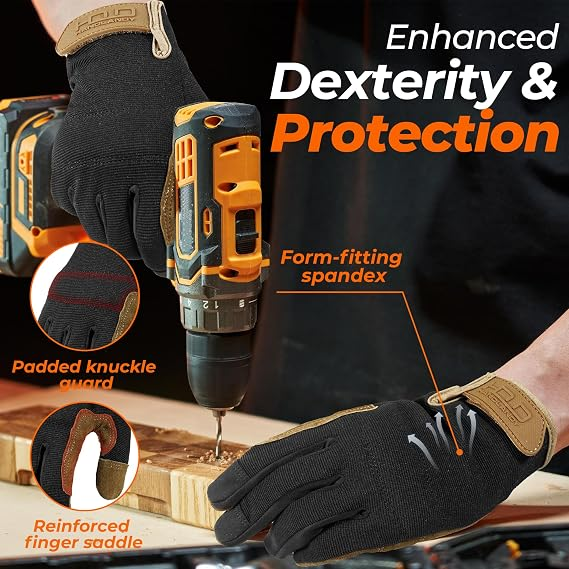
A major advantage of local reinforcement is that it only adds material at the thumb crotch. The rest of the glove stay thin and flexible. Workers retain full freedom to bend thumbs and fingers for detailed operations. Many reinforced patches also include textured surfaces, improving friction and creating a more secure grip on slippery tools or materials.
3.5 Reduce hand fatigue for long shifts
Repetitive gripping puts consistent pressure on the soft tissue in the thumb crotch. Over long working hours, this pressure builds up and causes hand soreness. The reinforced layer spreads gripping pressure across a wider surface area. It eases local strain and helps workers stay comfortable through long shifts with repeated grasping tasks.
4. Ideal Applications for Reinforced Thumb Crotch Work Gloves
Work gloves with thumb crotch reinforcement are best suited for roles with heavy, repeated gripping, pulling and rough surface contact.
- Construction: carrying bricks, handling lumber and operating hand tools
- Auto repair: gripping wrenches, handling metal parts and removing components
- Warehouse & logistics: loading, unloading and handling heavy packaged goods
- Metal fabrication: holding metal sheets and deburring workpieces
This extra reinforcement is unnecessary for light-duty tasks. Simple work like light item sorting, packing or basic office handing does not create enough stress on the thumb crotch, so standard gloves will work perfectly well.
5. Common Misconceptions
Misconceptions 1: Gloves with thumb crotch reinforcement are stiff and bulky
Many buyers worry reinforced patches will restrict thumb movement. But high-quality reinforcement uses thin, tough materials and careful cutting. Since only the small thumb crotch area is reinforced, overall glove flexibility stays good. Cheap thick patches are the main cause of stiffness, not reinforcement itself.
Misconception 2: All thumb crotch reinforcement delivers the same performance
Reinforcement quality varies widely. The material choice, patch size and stitching method all change durability. Low-cost reinforcement layers may peel, crack or separate quickly under heavy friction. When selecting gloves, always inspect the reinforcement patch and check the quality of surrounding stitching.
6. Conclusion
Thumb crotch reinforcement targets the weakest stress point on protective work gloves. It fights abrasion and tearing, guards critical seams, adds localized hand fatigue—all while keeping the dexterity workers need. This simple design delivers clear practical value: longer glove life and lower PPE costs for companies.
If your team performs heavy gripping, pulling or rough material handling, work gloves with reliable thumb crotch reinforcement are a smart investment. They prevent early glove failure and deliver consistent hand protection throughout every work shift.