Racing gloves are essential equipment for all professional racers and driving enthusiasts. Ordinary daily gloves cannot meet the safety and control needs of driving scenarios. Professional racing gloves focus on safety performance, grip stability and wearing comfort.
This article will introduce the core features, common types and mainstream materials of racing gloves, helping you quickly select suitable gloves for your driving needs.
1. Core Features of Racing Gloves
1.1 Flame and Heat Resistance
Racing gloves adopt professional flame-retardant synthetic fiber and treated leather materials. These special materials have low flammability and high heat insulation properties. They resist high temperature and sudden flames, effectively protecting hands from burns during track emergencies.
1.2 Enhanced Anti-Slip Grip
The palm is made of high-friction leather and textured anti-slip coating materials. The special surface texture and material toughness greatly increase friction with the steering wheel. It avoids slipping during high-speed driving and sharp turns, ensuring stable and accurate operation.
1.3 High Flexibility & Snug Fit
Racing gloves adopt soft, elastic fine leather and lightweight composite materials, matched with ergonomic tailoring. These flexible materials fit hands closely without tightness, support free finger movement and provide sensitive steering feedback.
1.4 Vibration Reduction & Fatigue Relief
The palm is added with soft shock-absorbing buffer materials. This targeted buffer structure absorbs and reduces steering wheel vibration transmitted during driving. It relieves hand soreness and fatigue caused by long-term driving or racing.
1.5 Abrasion & Tear Resistance
Racing gloves adopt high-tensile leather and reinforced threading materials. These premium materials and tight stitching effectively resist daily friction and tearing, maintaining stable performance for long-term intensive use.
2. Different Kinds of Racing Gloves
2.1 By Sewing Craft
– In-seam Gloves: Smooth inner stitching improves finger flexibility and touch sensitivity.
– Out-seam Gloves: Outer stitching strengthens structure and wear resistance.
2.2 By Finger Design
– Full-finger Gloves: Full hand coverage provides complete flame, heat and scratch protection.
– Half-finger Gloves: Light and breathable, offering basic protection and free movement.
3. Racing Glove Materials
3.1 Kangaroo Leather
It is a premium racing glove material. It features ultra-light weight, excellent flexibility and high wear resistance, providing the most sensitive steering feedback, though at a higher cost.
3.2 Cowhide
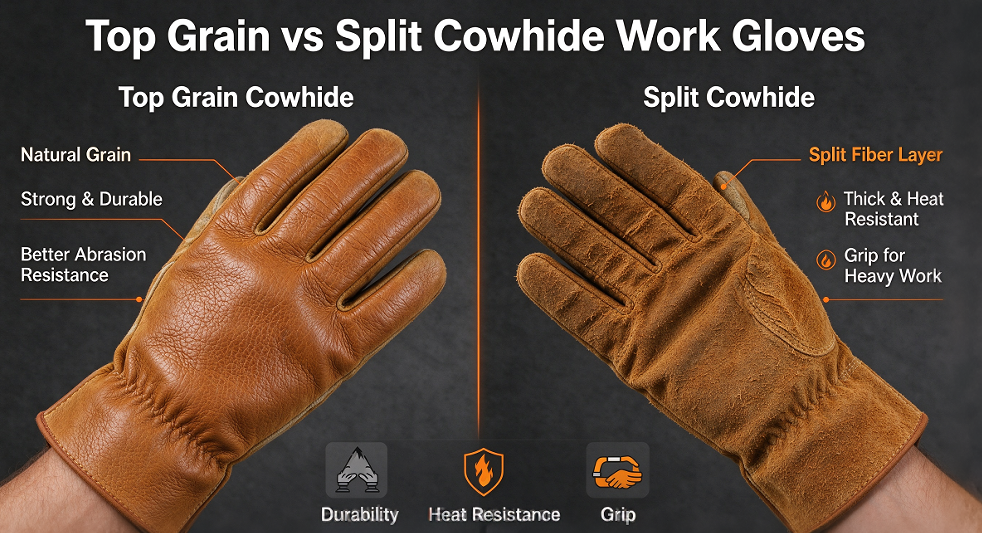
Cowhide is thick, sturdy and durable. It has a solid hand feel and stable performance.
3.3 Goatskin
Goatskin offers balanced softness and durability at a lower cost.
3.4 Synthetic leather
It features good flexibility, scratch resistance and low maintenance costs. This material is lightweight, easy to clean and highly affordable. It works well for casual driving and regular daily practice, ideal for drivers with a limited budget.
4. Conclusion
A qualified pair of racing gloves is far more than ordinary hand wear—it is a functional safety accessory that balances professional protection, precise control and long-term comfort. Every core performance, from flame resistance and anti-slip grip to flexibility and wear resistance, relies on targeted material selection and exquisite craftsmanship.
Understanding the differences between racing glove features, classifications and materials allows drivers to abandon blind purchase habits. You can match gloves scientifically according to your driving scenarios and budget, effectively improving driving stability and safety. For all racing and driving enthusiasts, prioritizing matching performance over appearance is the key to choosing reliable racing gloves.