
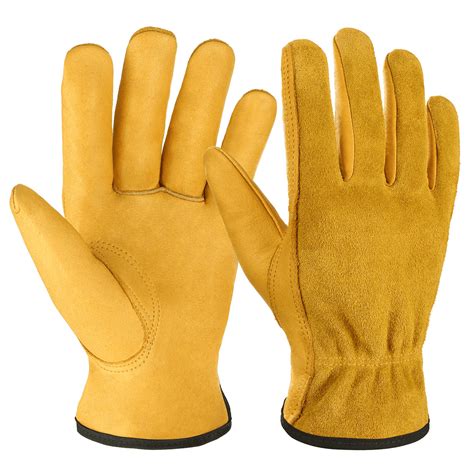
In an era of advanced synthetics, one natural material continues to set the benchmark for high-performance professional gloves: goatskin. For landscapers, mechanics, assembly workers, and any professional requiring precision and durability, goatskin offers a combination of properties that synthetic materials still strive to match. Here’s why it’s worth the investment.
The Anatomy of Excellence: It Starts with the Fiber Structure.
Goatskin’s superiority isn’t accidental; it’s structural. Its collagen fibers are woven in a dense, irregular, and multidirectional pattern. This unique matrix creates three definitive advantages:
- Exceptional Durability & Abrasion Resistance: The dense fiber network makes goatskin highly resistant to scuffs, scratches, and wear-through from constant friction with tools, rough wood, or metal. A quality goatskin palm outlasts many standard synthetic or split leather palms by a factor of 2 or 3, providing a lower cost-per-hour in high-abrasion applications.
- Natural, In-Born Flexibility: Unlike stiffer bovine leathers that require extensive “breaking in,” goatskin is naturally supple. It contours to the worker’s hand almost immediately, reducing break-in time and hand fatigue. This flexibility is maintained over time and across a wide temperature range.
- The Ultimate in Dry & Oily Grip: Goatskin has a distinctive, slightly pebbled grain. This micro-texture, combined with the natural oils in the leather, creates an inherently high-friction surface. It provides a secure, “live” grip on dry tools. Crucially, as the leather absorbs minute amounts of sweat and oils from the user’s hand over time, it develops an even better personalized grip—something synthetics cannot replicate.
The Professional’s Choice: Where Goatskin Delivers Maximum ROI.
While excellent for many tasks, goatskin is the undisputed choice for specific professional niches:
- Landscaping & Arboriculture: Resists thorns, abrasion from rocks and wood, and provides the grip needed for chainsaws and pruning tools.
- Precision Mechanics & Assembly: The thin profile and sensitivity allow workers to feel small parts and fasteners, while still protecting against sharp edges.
- Light Material Handling & Logistics: Ideal for handling wooden crates, machinery, or parts where dropping items due to poor grip is a cost and safety issue.
Addressing the Questions: Care and Comparison.
- Vs. Synthetic Leather: While synthetics offer good initial performance and are easier to clean, they often abrade and crack more quickly under sustained mechanical stress. They lack the long-term molding and improving grip of goatskin.
- Vs. Cowhide (Bovine Leather): Standard cowhide is thicker and stiffer, offering great abrasion resistance but less dexterity. It’s better for heavy, non-precision welding or rigging. Goatskin sits in the sweet spot between durability and feel.
- Maintenance: Goatskin is low-maintenance but benefits from occasional conditioning with a leather-specific product to replenish natural oils, especially after exposure to water or harsh cleaning.
The Smart Procurement Question:
Don’t just ask for a “leather glove.” Specify: “We need a goatskin palm glove for tasks requiring a combination of durability and fine motor skills.” Request a sample and conduct a flex test and grip test with actual tools alongside a synthetic alternative. The difference in hand feel and confidence is immediately apparent.
Conclusion: The Tool That Improves with Use.
In a world of disposable PPE, goatskin represents a different philosophy: a high-performance tool that endures and adapts. Its higher initial cost is justified by its extended service life, superior grip that enhances work quality and safety, and unparalleled comfort that workers appreciate. For professionals whose work is in their hands, goatskin isn’t just an option—it’s the intelligent, performance-driven standard.





One Response
It’s interesting how goatskin still holds up against modern synthetics – I was researching similar material comparisons and found some helpful information on https://tinyfun.io/game/blocky-rider regarding material durability.