When selecting safety gloves, “cut-resistant” is a common requirement. However, the materials behind this term vary greatly. Two of the most prominent high-performance fibers are Kevlar (an aramid) and HPPE (High-Performance Polyethylene). While both offer exceptional protection, their inherent properties lead to different strengths in real-world applications. This guide delves deeper into their science, performance, and ideal use cases.
Understanding the Core Difference: Molecular Structure
The fundamental difference lies at the molecular level, which dictates how each fiber resists a cutting threat.
- Kevlar (Aramid): The Tough Network
Kevlar fibers are rigid, rod-like molecules with strong hydrogen bonds between them, forming a highly ordered and incredibly tough structure. When a blade impacts this dense network, the fibers absorb and distribute the energy. They resist being pulled apart, effectively “catching” and blunting the blade through sheer strength and friction. However, this rigid structure can be compromised by prolonged exposure to certain elements. - HPPE: The Slippery Chain
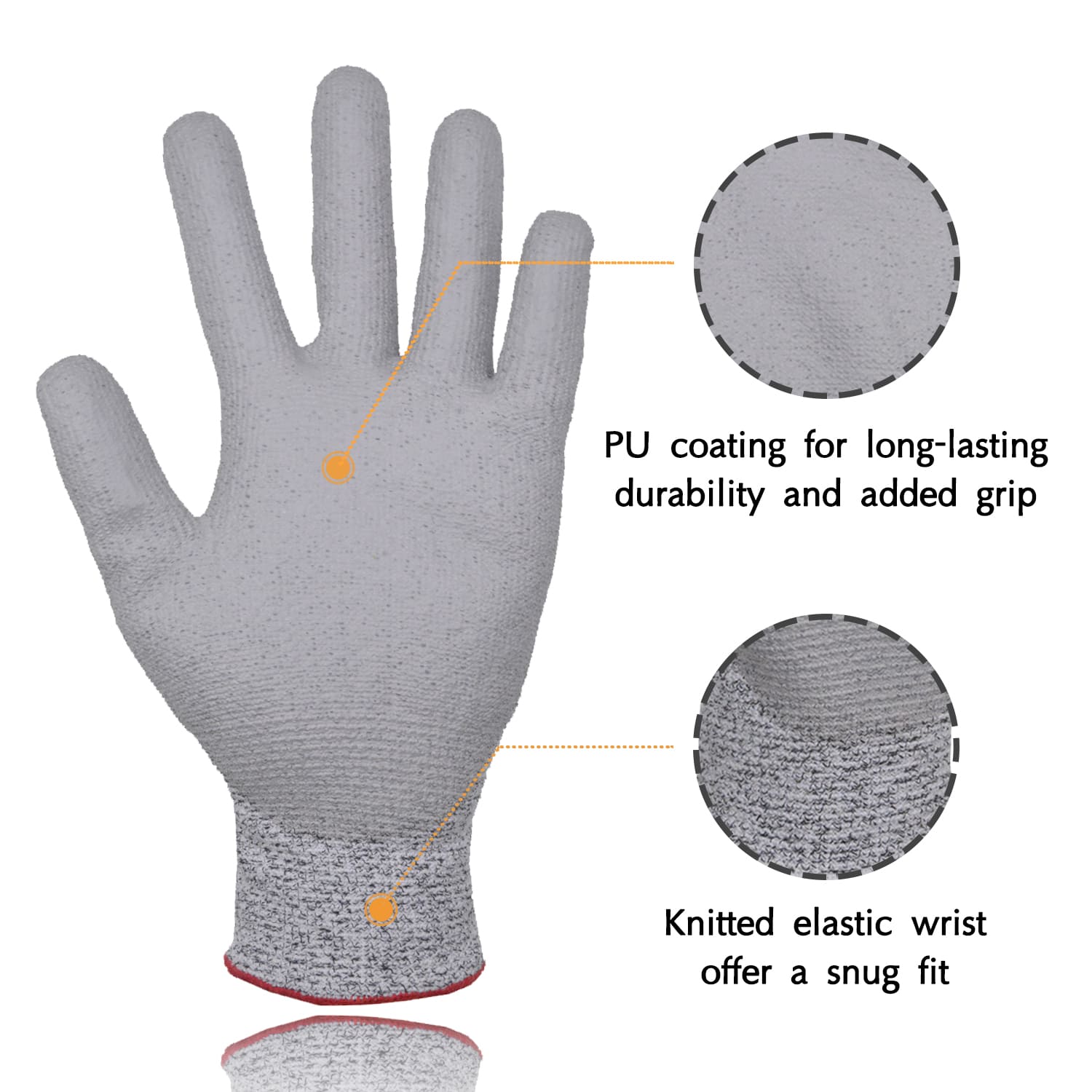
HPPE fibers are composed of extremely long, aligned polyethylene chains with very few entanglements. This creates a surface with exceptionally low friction. More importantly, HPPE has the highest specific strength of any commercial fiber. When a blade meets HPPE, two things happen: the blade tends to slide on the slippery surface, and the incredibly strong chains are very difficult to sever. Its protection comes from deflecting and resisting, rather than purely absorbing force.
Beyond the Basics: A Detailed Performance Comparison
The structural difference leads to distinct practical profiles.
| Feature | Kevlar (Aramid) | HPPE | Why It Matters |
|---|---|---|---|
| Primary Cut Mechanism | Energy absorption & high friction. | Deflection & ultra-high tensile strength. | Determines performance against slicing vs. pressing motions. |
| Heat & Flame Resistance | Excellent. Does not melt; chars at ~450°C. | Poor. Melts at a relatively low temperature (~150°C). | Critical for welding, foundries, or any work with heat/sparks. |
| Flexibility & Weight | Very good, soft hand feel. | Superior. Lighter and more flexible at the same cut level. | Impacts dexterity and user comfort over long shifts. |
| Moisture & Chemical | Weakens when wet (~15-20% strength loss). Sensitive to strong acids/bases and UV degradation. | Resistant. Maintains strength when wet. Highly resistant to most chemicals and UV. | Defines suitability for wet processing, outdoor, or chemical environments. |
| Long-Term Durability | Excellent abrasion resistance. | Can be prone to abrasion over time, though newer blends improve this. | Affects glove lifespan in high-wear applications. |
Advanced Application: Combining Forces and Understanding Standards
Modern gloves often blend these fibers with others like stainless steel or fiberglass to achieve higher cut protection (e.g., ANSI/ISEA Cut Level A4-A9). It’s crucial to understand that no fiber is “cut-proof”—protection is about increasing resistance to a dangerous level.
Furthermore, the cut test standard (ISO 13997 vs. EN 388:2016 TDM) matters. HPPE often excels in the more modern ISO test (measuring the force needed to cut through), while Kevlar performs consistently across tests. Always check the test method behind the rating.
Practical Selection Guide:
- Choose Kevlar-Dominant Gloves For: General metal handling, assembly with sharp edges, glass handling, and environments with intermittent heat or sparks. Ideal where durability and multi-hazard protection are key.
- Choose HPPE-Dominant Gloves For: High-cut-risk tasks like knife work in food processing, handling sheet metal, or packaging, especially in wet or chemically exposed settings. Perfect when maximum dexterity and cut resistance are the top priorities.
The Bottom Line:
The choice isn’t about which fiber is universally better, but which is better for your specific hazard profile. The most advanced gloves now intelligently combine Kevlar, HPPE, and other materials in different parts of the glove, offering a balanced shield that leverages the unique advantage of each fiber to deliver optimal protection, comfort, and value.