For decades, protection against extreme cold meant wearing bulky gloves that sacrificed dexterity. Modern work demands better solutions. The innovation lies not in simply adding more material, but in intelligent layering. The three-layer composite structure, inspired by high-performance outdoor apparel, has become the benchmark for gloves that are both warm and functional. This article breaks down the science behind each layer and the advanced materials that make it possible.
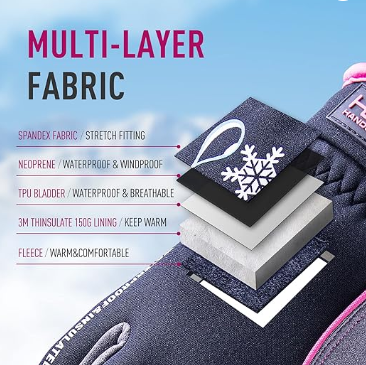
The core principle is managing heat, moisture, and air. Each layer has a distinct, complementary role:
The true advancement is in the materials within these layers. Traditional insulation traps air, but new “active” materials enhance performance. For instance, research shows that integrating PCM microcapsules into the insulation can significantly extend the time a glove resists a -50°C environment. Similarly, using nanocellulose aerogels—a lightweight, bio-based material with extremely low thermal conductivity—allows for thin, flexible gloves that offer superior thermal resistance.
The method of combining these layers is equally critical. Advanced fusion bonding techniques (like the Fusion Control™ mentioned in some products) laminate the layers without traditional stitching. This creates a seamless, unified structure that is more effectively windproof and waterproof than sewn assemblies. Studies confirm that such fused or laminated multilayer constructions offer greater thermal resistance than the sum of their individual parts, achieving a synergistic “1+1>2” effect in thermal protection.
In summary, the modern three-layer winter glove is a sophisticated piece of functional design. By combining a protective shell, an intelligent insulation layer with advanced materials like PCMs or aerogels, and a moisture-wicking liner through seamless bonding, it delivers maximum warmth with minimum bulk—ensuring productivity and safety in the coldest environments.