Introduction
When choosing industrial work gloves, most buyers focus on materials like nitrile, latex, leather, or insulation. But one of the most important factors is often overlooked: knitting density.
Knitting density—measured in stitches per inch (SPI)—determines how tightly the glove base is constructed. It directly impacts two essential features:
- Durability (abrasion resistance, tear strength, coating adhesion)
- Comfort (flexibility, breathability, fit)
In this guide, we explain exactly how knitting density improves glove performance and helps you select the best gloves for mechanical work, construction, assembly lines, and outdoor jobs.
What Is Knitting Density?
Knitting density refers to the number of stitches in one inch of the glove’s knitted base.
The higher the SPI, the tighter and denser the glove material.
Most industrial gloves range from:
- 8–9 SPI: Loose knit (high flexibility)
- 10 SPI: Medium knit (balanced performance)
- 11–12 SPI: Tight knit (high durability)
Even small changes in SPI can completely change how a glove performs.
How Knitting Density Improves Glove Durability
1. Higher Density = Better Abrasion Resistance
Tight knitting creates a stronger, more compact base that resists wear and tear.
- Gloves with 11–12 SPI last longer in heavy-duty work
- They withstand friction from metal, wood, machinery, and construction materials
- Low-density gloves (8–9 SPI) wear out faster under harsh conditions
For mechanics, warehouse workers, and construction teams, higher knitting density means fewer replacements and lower costs.
2. Improved Tear Strength
Dense stitches distribute force evenly across the glove.
This makes gloves less likely to tear when pulling, gripping, or handling sharp objects.
Tight-knit gloves are widely used for:
- Machinery operation
- Metal handling
- Construction
- Automotive repair
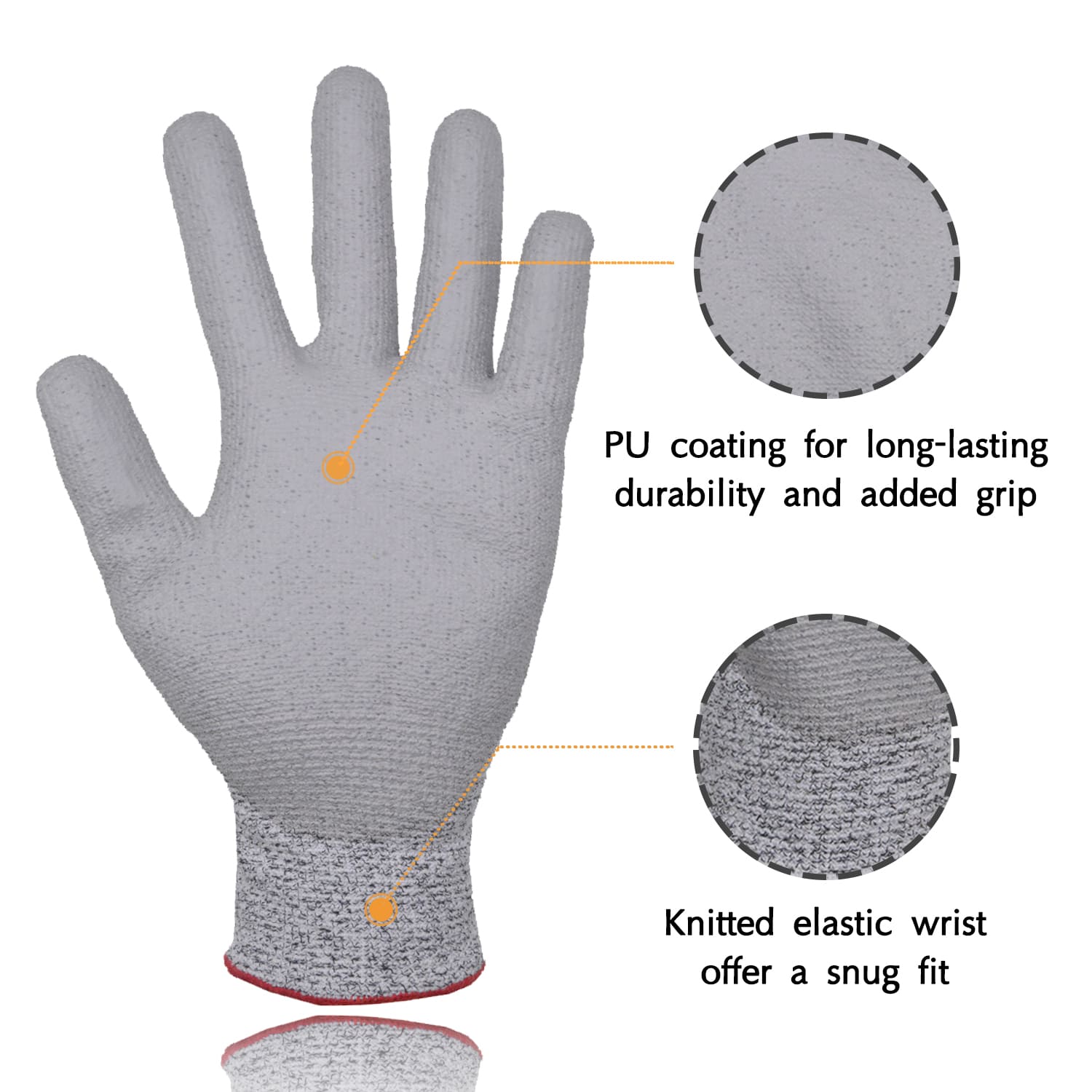
3. Stronger Coating Adhesion (For Nitrile / Latex / PU Gloves)
Knitting density also affects how well coating materials stick to the glove base.
- Tighter knit provides more surface area for the coating to bond
- Less peeling, cracking, or separation during use
- Longer-lasting protection in oily or wet conditions
This is why high-quality dipped gloves almost always use 10–12 SPI knitting.
How Knitting Density Improves Comfort
1. Dexterity for Precision Work
Lower knitting density (8–9 SPI) creates a softer, more flexible base ideal for:
- Assembly lines
- Electronic work
- Small part handling
- Tasks that require finger sensitivity
Loose-knit gloves move naturally with the hand, reducing fatigue.
2. Breathability
Looser knitting allows more air flow.
This reduces sweat and discomfort during long shifts—especially important in warm workshops or summer outdoor work.
3. Better Fit & Flexibility
Medium-density knitting (10 SPI) provides the best balance:
- Snug but not tight
- Flexible enough for all-day wear
- Suitable for most general industrial jobs
Knitting Density Recommendation by Work Type
| Work Scenario | Recommended SPI | Benefit |
|---|---|---|
| Precision assembly, light industry | 8–9 SPI | High dexterity & breathability |
| General manufacturing, warehouse | 10 SPI | Balanced comfort & durability |
| Mechanical repair, construction | 11–12 SPI | Maximum abrasion & tear resistance |
| Winter work gloves | 11–12 SPI | Better insulation & wind resistance |
Choosing the right SPI ensures gloves perform exactly as needed.
Conclusion
Knitting density is not just a production detail—it is a key factor that improves both glove durability and comfort.
- Tight knitting (11–12 SPI) boosts strength, abrasion resistance, and coating adhesion
- Medium knitting (10 SPI) offers the best all-around performance
- Loose knitting (8–9 SPI) maximizes flexibility and breathability
For industrial buyers, understanding knitting density helps select longer-lasting, more comfortable, and higher-value work gloves.
If you are looking for durable, well-knitted work gloves for mechanical, industrial, construction, or winter use, choosing the right knitting density will directly improve safety, efficiency, and worker satisfaction.