Industrial work gloves are critical for protecting workers from hazards like cuts, abrasions, chemicals, and mechanical impacts—making quality control (QC) a non-negotiable part of the manufacturing process. A single flaw in material selection, production, or finishing can compromise glove performance, leading to workplace injuries, increased replacement costs, and non-compliance with global safety standards (e.g., EN388, ANSI/ISEA 105). This article breaks down the 6 key QC steps that ensure industrial gloves (including nitrile-coated, leather, and winter work gloves) meet safety requirements and perform reliably in real-world industrial settings. From raw material inspection to final product certification, we’ll explore how rigorous QC processes translate to durable, safe gloves for mechanical, construction, and manufacturing tasks.
1. Raw Material Inspection: The Foundation of Quality
Before production begins, all raw materials undergo strict testing to eliminate defects that could weaken the final product. This step applies to both core materials (fibers, leathers, coatings) and auxiliary components (linings, stitching thread, adhesives).
Key Inspection Criteria
- Fibers & Fabrics: For knitted glove substrates (used in nitrile/latex/PU coated gloves), test tensile strength (per ASTM D5034) and yarn uniformity—loose or weak yarns lead to tearing during use. Common fibers like polyester, cotton, and UHMWPE must meet minimum breaking force standards (≥50N for industrial use).
- Leathers: For cowhide/goatskin/pigskin gloves, inspect grain integrity (no scars or holes), thickness consistency (±0.1mm), and tanning quality—chrome-tanned leathers are tested for heavy metal content (≤3mg/kg per REACH regulations) to ensure safety.
- Coating Materials: Nitrile, latex, and PU 胶液 are checked for viscosity (200–300 mPa・s for optimal dipping), pH level (6.5–7.5 for compatibility with substrates), and purity (no contaminants like dust or lumps that cause uneven coating).
- Auxiliary Materials: Stitching thread must be abrasion-resistant (≥3000 cycles per ASTM D3883) and colorfast; linings (e.g., fleece for winter gloves) are tested for warmth retention and breathability.
QC Action: Reject batches that fail any criteria—e.g., leather with holes larger than 2mm, or nitrile 胶液 with inconsistent viscosity.
2. In-Process QC: Monitoring Production Stages
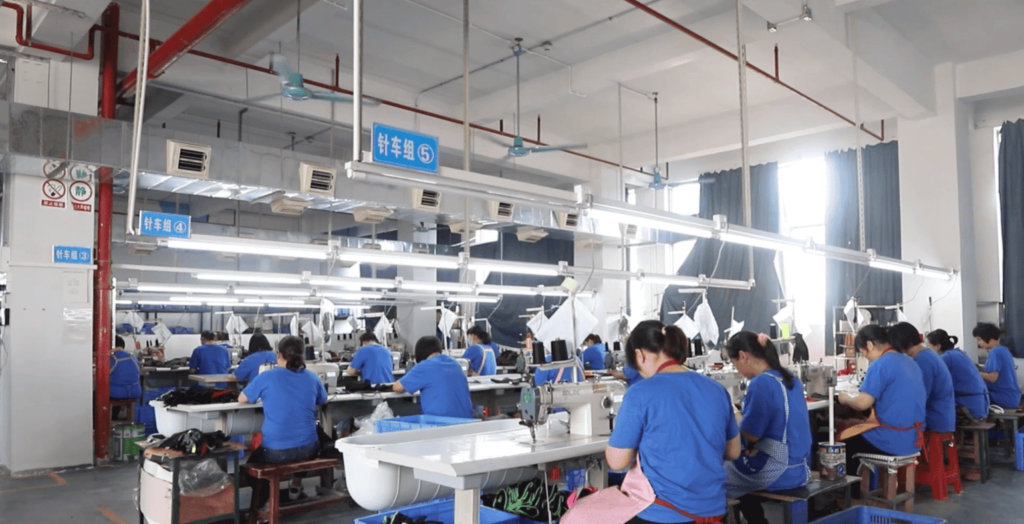
QC teams conduct real-time checks during manufacturing to catch issues before they escalate. Industrial glove production involves multiple stages, each with unique quality risks.
Critical Production Stages & Checks
- Knitting Process: For glove substrates, verify knitting density (stitches per inch, SPI) to ensure consistency—too loose (≤8 SPI) reduces durability, while too tight (≥12 SPI) compromises comfort. Use automated sensors to detect dropped stitches or yarn breaks.
- Dip Coating (for coated gloves): Monitor dip time (3–5 seconds), 胶液 temperature (25–30°C), and curing temperature (120–140°C for nitrile). Check coating thickness (0.3–0.5mm for heavy-duty use) with a digital micrometer—uneven coating leads to weak spots.
- Leather Cutting & Stitching: For leather gloves, ensure cut pieces match pattern dimensions (±0.5cm) to avoid ill fit. Inspect stitching for tightness (no loose threads) and stitch density (8–10 stitches per cm) to prevent tearing at seams—critical for mechanical work gloves.
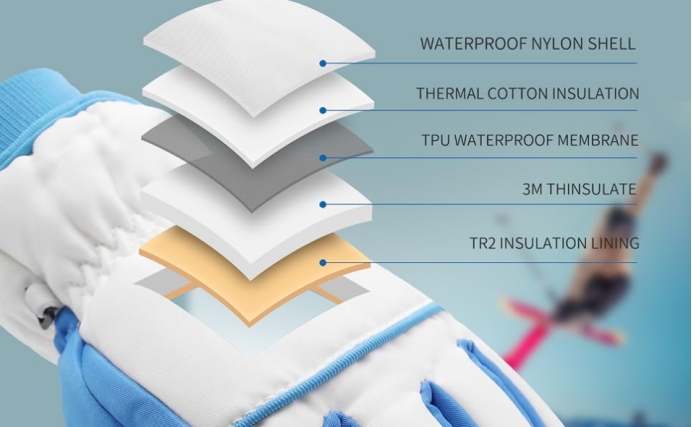
- Lining & Assembly: For winter gloves, check that thermal linings are evenly attached (no gaps) and that waterproof membranes (e.g., TPU) are free of pinholes—test water resistance via the AATCC 22 spray test.
QC Action: Pause production if defects exceed 1%—e.g., 3 out of 300 coated gloves have uneven coating.
3. Chemical & Safety Compliance Testing
Industrial gloves must meet global safety standards to protect workers from chemicals, cuts, and other hazards. QC teams conduct specialized tests to ensure compliance.
Key Compliance Tests
- Chemical Resistance (EN388:2016): Test coated gloves against 12 common industrial chemicals (e.g., diesel oil, sulfuric acid) to measure breakthrough time—nitrile gloves must have a breakthrough time ≥30 minutes for oils.
- Cut Resistance (ANSI/ISEA 105:2021): Rate gloves on a scale of A1 (200g) to A9 (6000g) using the TDM-100 test—mechanical gloves for heavy machinery require a minimum A4 rating (1000g).
- Allergy Safety: For latex gloves, test for residual proteins (≤20μg/g per ISO 10993-15) to reduce allergy risks; nitrile and PU gloves are verified as 100% latex-free.
- Winter Glove Specific Tests: Measure thermal resistance (≥0.15 m²·K/W per EN 511) for cold environments and flexibility at low temperatures (-10°C) to ensure gloves don’t stiffen.
QC Action: Only proceed to finishing if gloves pass all compliance tests—label non-compliant batches for destruction.
4. Durability & Performance Testing
Real-world use demands gloves that withstand abrasion, tearing, and repeated use. QC teams simulate industrial conditions to test long-term performance.
Core Performance Tests
- Abrasion Resistance (ASTM D3883): Use a Martindale tester to measure cycles until the glove substrate is exposed—industrial gloves must withstand ≥3000 cycles (≥5000 for heavy-duty mechanical use).
- Tear Strength (ASTM D412): Test the force required to tear the glove (≥15N for coated gloves, ≥25N for leather gloves)—critical for tasks like handling sharp metal parts.
- Grip Performance: Test wet/dry grip using a force gauge—gloves must maintain ≥80% grip strength when wet (per ISO 28199) to prevent slips in mechanical or construction settings.
- Fit & Comfort: Have 10 test subjects wear gloves for 2-hour shifts to rate flexibility, breathability, and fit—ill-fitting gloves (too tight/loose) reduce productivity and safety.
QC Action: Retest batches with below-average performance—e.g., leather gloves that fail the tear strength test.
5. Finishing & Packaging QC
Even minor flaws in finishing (e.g., loose threads, incorrect labeling) can damage brand trust. This step ensures gloves are ready for shipment and use.
Finishing Checks
- Visual Inspection: Check for cosmetic defects (scratches on leather, uneven coating, loose threads) and functional issues (broken Velcro straps, faulty zippers on winter gloves).
- Labeling Compliance: Verify that labels include safety standards (e.g., “EN388: 4X4321”), material composition, size, and care instructions—required for global markets like the EU and US.
- Packaging: Ensure gloves are packaged in moisture-resistant bags (to protect leather and coated surfaces) and that each package contains the correct number of gloves (no shortages).
QC Action: Remove defective gloves (e.g., mislabeled or scratched) and repackage—conduct a final spot check of 5% of packages.
6. Final Batch Certification
Before shipping, a random sample of gloves from each batch undergoes a comprehensive audit to confirm consistency and compliance.
Certification Process
- Sample Selection: Test 3% of the batch (minimum 50 gloves) for all key metrics (compliance, durability, fit).
- Documentation: Compile QC reports including raw material test results, in-process checks, and final performance data—required for B2B buyers (e.g., manufacturing plants) to verify quality.
- Batch Approval: Only batches with a defect rate ≤0.5% receive certification and are released for shipment.
QC Action: Quarantine batches with high defect rates for rework or destruction—no non-certified gloves leave the facility.
Conclusion
Rigorous quality control is the backbone of reliable industrial work gloves. By following these 6 key steps—raw material inspection, in-process monitoring, compliance testing, performance validation, finishing checks, and batch certification—manufacturers ensure gloves meet safety standards, withstand industrial use, and protect workers. At [Your Brand], our industrial gloves (including mechanical, winter, and 浸胶 models) undergo every QC step outlined here, with full documentation available for buyers. Whether you need cut-resistant leather gloves or chemical-resistant nitrile gloves, trust our QC-approved products to enhance safety and productivity in your workplace. Contact our team to learn more about our quality processes or request a sample.